martes, 6 de febrero de 2018

Unit 4C: Comparison

Both adjectives and adverbs  have comparative form,  used to compare two things. The comparison is formed in two different ways depending on the type of adjective:
1. One-syllable adjectives add final -er + than, for example, small / smaller than.
2. Two-syllable adjectives ending in -Y make the comparison in the same way as one-syllable adjectives, for example, easy / easier than.
3. For the comparison of the rest of the adjectives we add more + adjective + than, for example, difficult / more difficult than.
Remember there are spelling rules you can´t forget!  

Unit 4A: Shops


I love shopping! Last week we talked about shopping. If you want to learn more vocabulary related to this topic,  here you have a list of them and some dialogues to complete. And here a ppt with the pronunciation!

miércoles, 24 de enero de 2018

Unit 4 A: Present Perfect Tense

The present perfect is used to talk about a recent past action which is still true in the present. It is used to talk about past experiences too when we don´t mention when the action happened. To form the present perfect we use HAVE/HAS as auxiliary verb and the past participle of the main verb. Practise the structure doing these activities. And if you want to know which time expressions are used with the present perfect and which ones with the past simple try this exercise. 

Unit 3: Food and Restaurants


Image result for restaurants clipart
Añadir leyenda

 Have a look this link where you can read a conversation at a restaurant and learn some new words. And let´s finish with a listening!

martes, 5 de diciembre de 2017

Unit 3C: Defining Relative Clauses


Image result for relative clause quiz eslHI! Today we´ve talked about "Relative Clauses". You can download the presentation on this link. I enjoyed the class a lot and you realized relative clauses are really useful to give definitions and describe people, places and things. Let´s try a quiz, how much do you know??? Do you need more practice?

martes, 28 de noviembre de 2017

Questions

In our first lesson we revised how questions are formed in the present and past. Also, we revised question words, that is, those elements which appear at the beginning of some questions: what, who, why, whose... Let´s start our engines with an exercise where you have to introduce the correct question word. Let´s finish with a revision on the different tenses:


lunes, 27 de noviembre de 2017

Unit 3A & 3B: Be going to or Present Continuous

Last week we learnt how to express future. In English we use two structures: Be going to (used to make a prediction based on an evidence and to talk about future plans or intentions) and the Present Continuous (used to talk about arrangements). Have a look at this video.
And if you want some practice, visit this link and do these exercises!

Unit 2C: Sentence connectors

When we talk or write, our sentences and words are joined. The use of connectors helps us to express different meanings: we can introduce the reason why something has happend (because), or addition (and, as well, also, too, moreover), we can also express result (so), contrast (however, although), etc.
Here you have a presentation that can help you to understand these meanings!

Unit 2B: Past Simple and Past Continuous

Hi all! Let´s see  past tenses. Remember with both tenses -past simple and past continuous-  we´re talking about past events which finished in the past. Let´s try to distinguish these tenses:
-Exercise 1
- Exercise 2
- Exercise 3
I know it´s really difficult to decide what  the correct pronunciation for the final -ed is while you´re talking, since you have no much time to think. However, the final -ed sound is really important. I want you to do some exercises I posted last week on another blog I have. Let´s do some listenings too!

Unit 2 A: Past tenses exercises


Image result for past simple esl I´ve found a web to review the simple past tense. Here you will read about J.K. Rowling, Harry Potter´s creator. Not only will you practise irregular verbs, but also you can do vocabulary activities and even watch a video!!! Have fun!
After this, and if you still want to continue, enjoy playing this game and check how much you know about the past simple taking this test.

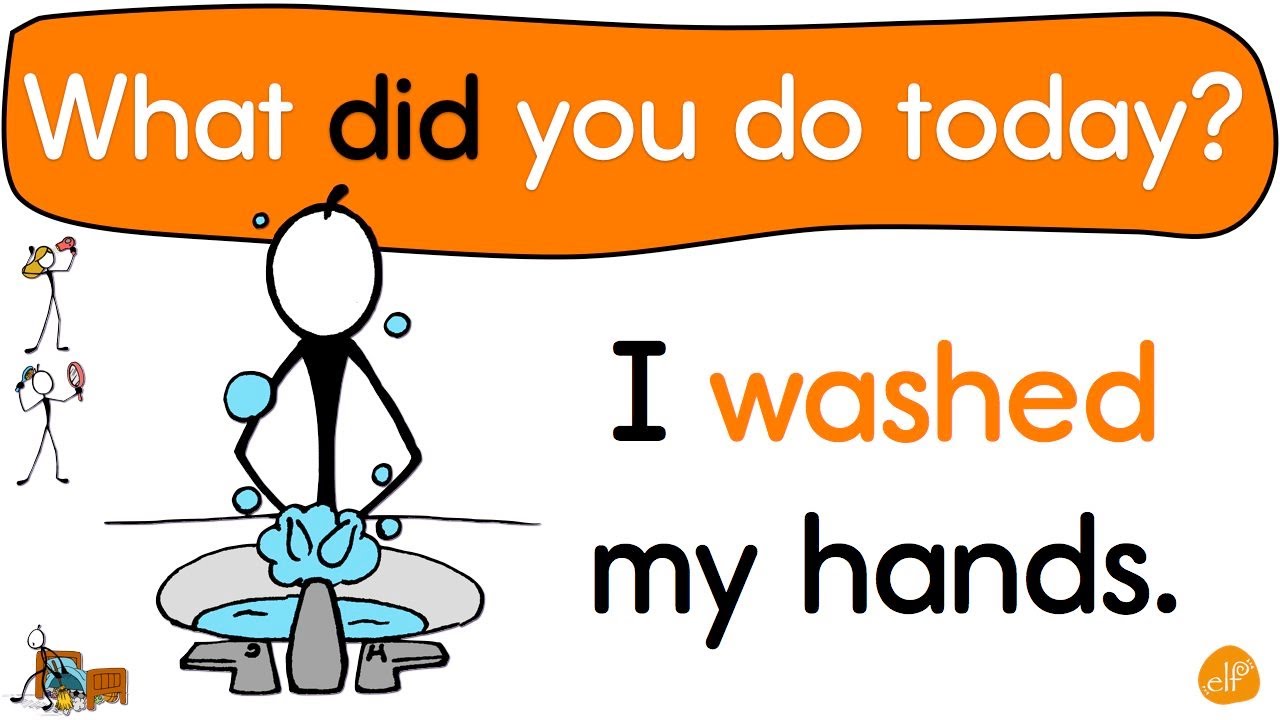
Unit 2A: What did you do yesterday?

 Yesterday we did more activities about the past simple. On this web there is an explanation of how to form the past and the pronunciation of regular verbs. You can practise your skills watching this video and ansering the questions. If you still want more practice, click on this link.

Unit 1C: Present Continuous

Image result for present continuous
Well, here you have the use of the Present Continous and some gap filling exercises. You can practise here the spelling rules to form the -ing form of the verbs, here you have some activities. To finish, let´s do an exercise to distinguish between the use of the Present Continuous and the Present Simple! 

Descriptions

Hi everyone!!
Here you have some vocabulary about family and you have some new words to describe people´s personality in the presentation we saw in class.. Remember when we ask "what are you like?" we refer to personality, on the contrary, if we ask "what do you look like?" we refer to appearance.
On this link you have enough practice, although I know there are some words you may not know, but don´t worry! with this you can increase your vocabulary!

UNTI 1B: Present SImple Review

In this lesson we revised the use and the structure of the present simple tense, however, we didn´t talk about the rules to form the third person in the sigular, click here and practise. Appart from this, I´d like you to watch this video which explains the use of the frequency adverbs.  I post the lisening in the presentation here just for you, to give you the opportunity to listen to it the times you need.

Composition symbols

Instead of considering errors as a failure, you should see them as a source of learning and be conscious of them. That is why I want you to correct your own mistakes in your compositions. I use symbols which tell you the type of mistake you´ve made, these are their meanings:

GR: Grammar, there is a grammatical mistake (*This car is my)
Voc: Vocabulary, the word is not correct in the context given.
C: Concord, you have a word in the singular which must be in the plural or viceversa.
WE: Wrong Expression, the sentence is not correct because you´ve translated directly from Spanish  
^ : Something is missing

English Sounds

I enjoyed our first phonetics lesson a lot, I hope you too!! We talked about summer holidays and worked on Phonetics. For this we used the song "Summercat", by Billie the Vision and the Dancers (I love it!!). After that, the students answered some questions about English Sounds.
In the BBC web page there is an interesting section called "Learn English" which contains thousand of exercises for students learning English. Today I want you to revise English sounds, and the best way to do is visiting this link where you have the possibility to watch a video of every single sound, just click on the symbol and prepare to practise!!!

domingo, 30 de septiembre de 2012

Descriptions II

I´ve been surfing the net looking for listening activities for you: I´ve found a matching vocabulary activity: You are given some words related to personality and you have to match them with the correct definition. And another exercise is this one, where you have to listen to a conversation between Kevin and María, they are talking about María and her sister. Decide if the sentences are true or false.